The Future of Industry 4.0: How Connected Machines are Transforming Pune’s Factories

The Future of Industry 4.0: How Connected Machines are Transforming Pune’s Factories

The industrial landscape of India is shifting at a lightning pace, and at the heart of this revolution is Pune. Known as the "Automobile Hub of India," Pune is no longer just about heavy machinery and assembly lines; it is becoming a global beacon for the Internet of Robotic Things (IoRT). As we move deeper into 2026, the concept of connected machines is transforming how local factories operate, making them smarter, faster, and more efficient than ever before.

What are Connected Machines?

In the simplest terms, connected machines are industrial robots and equipment that "talk" to one another. Unlike traditional isolated robots that follow a fixed script, these machines use sensors, IIoT (Industrial Internet of Things), and high-speed networks to exchange real-time data. This connectivity allows a robotic arm to adjust its speed based on a conveyor belt’s performance or alert a technician before a part fails.

For manufacturers, this means moving away from "reactive" fixes to "predictive" excellence.

The Rise of Connected Machines in Pune

Pune’s industrial belts—from Chakan and Talegaon to Pimpri-Chinchwad—are early adopters of these technologies. The demand for connected machines in Pune has skyrocketed as MSMEs (Micro, Small, and Medium Enterprises) look to compete on a global scale.

By integrating smart sensors and PLC-based systems, Pune-based factories are reducing downtime by up to 40%. The local ecosystem is uniquely positioned to lead this charge, supported by a dense network of automotive giants and tech-forward engineering firms. However, the biggest challenge isn't just buying the hardware; it’s training the workforce to manage these complex, networked systems.

Bridging the Skill Gap: Hytech Didactic’s Role

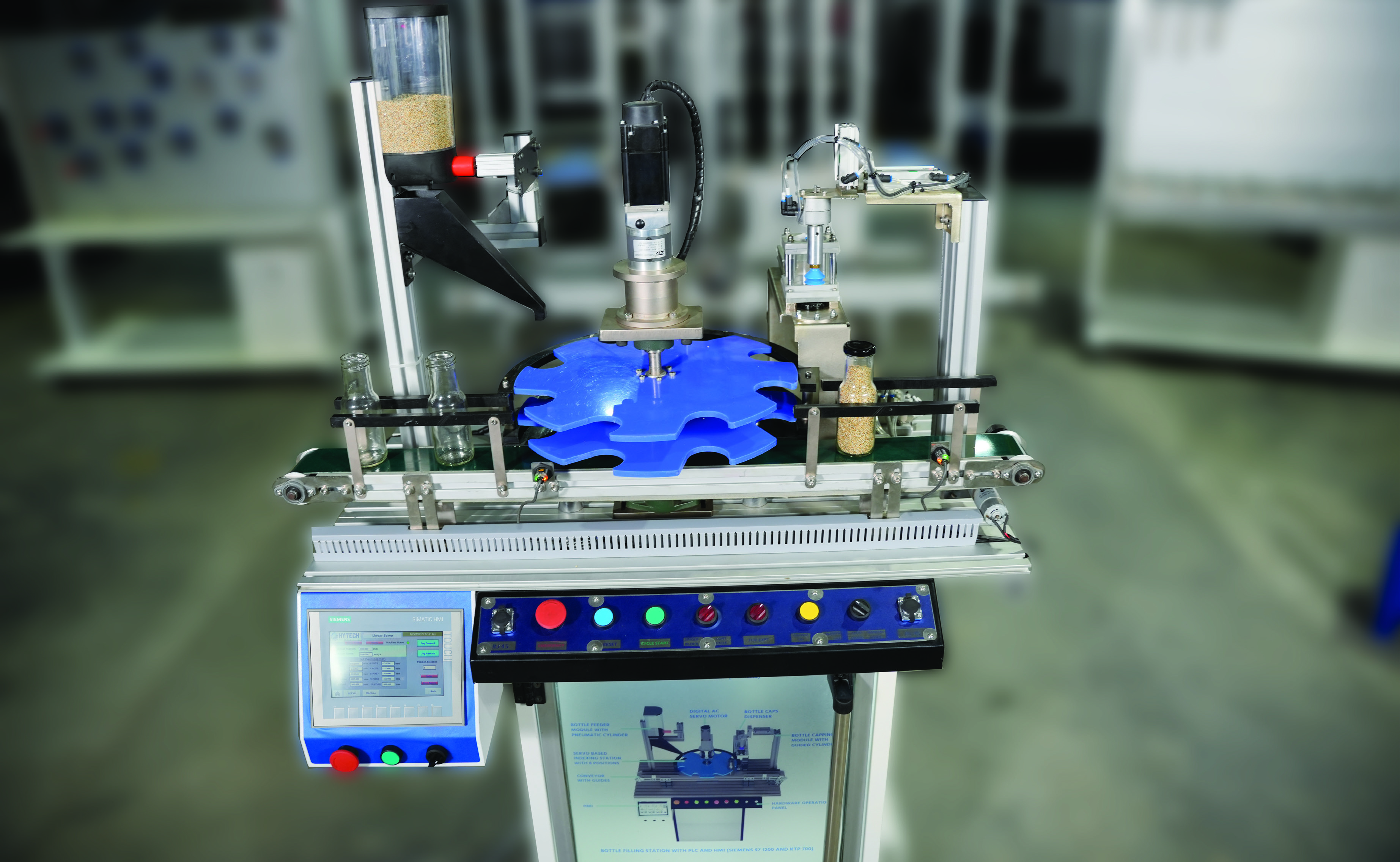
This is where Hytech Didactic comes in. As a premier manufacturer of industrial automation and robotics training kits in Pune, Hytech is empowering the next generation of engineers. Their training solutions, such as the Handling Robocell with IIoT, allow students and professionals to get hands-on experience with connected machines in a controlled, educational environment.

Hytech’s systems don't just teach robotics; they teach connectivity. By using IO-Link sensors and Digital Twin software, learners can simulate how a physical robot in a Pune factory interacts with its virtual counterpart.

A State-Wide Revolution: Connected Machines in Maharashtra

The trend isn't limited to Pune. We are seeing a massive surge in the deployment of connected machines in Maharashtra, stretching across the industrial corridors of Nashik, Aurangabad, and Nagpur. The Government of Maharashtra’s push for digital transformation has encouraged industries to adopt "Smart Factory" models.

With connected machines in Maharashtra becoming the standard, the state is securing its position as the industrial powerhouse of India. These machines enable:

  • Mass Customization: Factories can switch production lines instantly to meet specific customer needs.
  • Resource Optimization: Real-time data helps reduce energy consumption and material waste.
  • Enhanced Safety: Collaborative robots (cobots) work safely alongside humans, guided by IR sensors and light curtains.

The Road Ahead

The future of Industry 4.0 in Pune and beyond depends on how well we integrate these technologies into our daily workflows. Connected machines are the backbone of this movement. Whether you are a factory owner looking to upgrade your line or an educator preparing students for the future, the shift toward a networked industrial world is inevitable.

Hytech Didactic continues to lead this educational frontier, ensuring that "Make in India" is synonymous with "Smart Manufacturing."

Ready to bring the power of connected machines to your institution or facility? Explore Hytech Didactic’s range of Industry 4.0 training kits today.